Sunday, 1 March 2020

Monday, 17 February 2020
Market Me
Classics
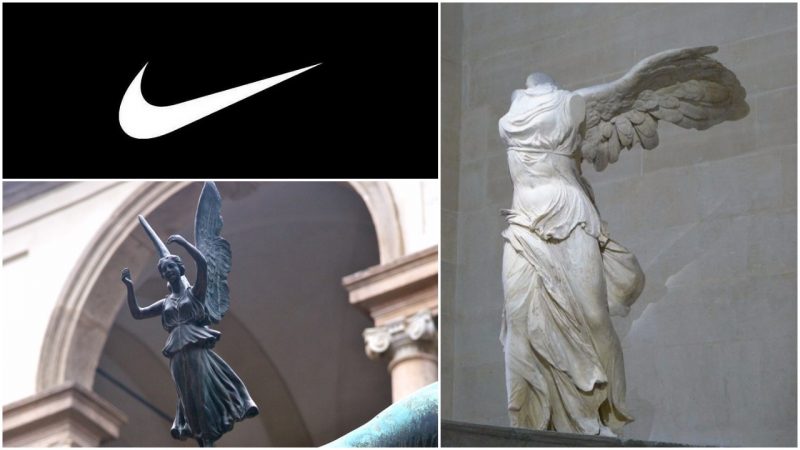
Why do modern household items hold the names of Ancient Greek characters?
How do the stories connect with the purpose of household products?
What do they tell us about how people see Greek Mythology
Nike shoe/clothing
Venus razors
Venus is the Roman goddess of love, fertility, but most importantly: beauty. Because women use shavers to make their legs smooth and beautifully hairless, the razor brand is essentially saying "if you use these razors you will be as beautiful as the Roman goddess herself". Gillette, the company which produces Venus razors, instills this idea with its tactical slogan: "reveal the goddess in you".
 Why these company's use the names of these Ancient Greek and Roman characters is because of the ideas and values these characters stand for. Because of these values solely concentrated in singular individuals, Greek Mythology is alluring in that regard to humans. For instance, not many brands would use the name of God in their modern household items due to the fact that what he stands for is so broad whereas a Roman goddess like Venus who concentrates on one value would serve more to the product's purpose they are broadcasting.
Sources:
Andrews, S. (2017, October 11) The ancient Greek goddess Nike, representing victory and speed, inspired the Nike company logo. Retrieved from
https://www.thevintagenews.com/2017/10/11/the-ancient-greek-goddess-nike-representing-victory-and-speed-inspired-the-nike-company-logo/
Why these company's use the names of these Ancient Greek and Roman characters is because of the ideas and values these characters stand for. Because of these values solely concentrated in singular individuals, Greek Mythology is alluring in that regard to humans. For instance, not many brands would use the name of God in their modern household items due to the fact that what he stands for is so broad whereas a Roman goddess like Venus who concentrates on one value would serve more to the product's purpose they are broadcasting.Sources:
Andrews, S. (2017, October 11) The ancient Greek goddess Nike, representing victory and speed, inspired the Nike company logo. Retrieved from
https://www.thevintagenews.com/2017/10/11/the-ancient-greek-goddess-nike-representing-victory-and-speed-inspired-the-nike-company-logo/
Monday, 24 June 2019
Poetic Language Features
English
Choose 3 language features which you have never heard of before. Define these and find/create 2 examples for each. Post to your blogs.
Allegory:
Allegory:
A short moral story (often with animal characters)
Animal Farm by George Orwell is a political allegory pertaining to the Russian Revolution of 1917 and the rise of communism. It outlines the different classes in society through the depiction of animals.
The Lion, the Witch, and the Wardrobe by C.S. Lewis is a religious allegory. In it, we find that Aslan the lion represents Christ or God, the White Witch represents evil, and Edmund represents Judas as the betrayer.
Enjambment:
The continuation of a syntactic unit from one line of verse into the next line without a pause.
"The holy time is quiet as a Nun
Breathless with adoration; the broad sun
Is sinking down in its tranquility;" Wordsworth, "Beauteous Evening"
"A thing of beauty is a joy forever:
Its loveliness increases; it will never
Pass into nothingness but still will keep
A bower quiet for us, and asleep
Full of sweet dreams, and health, and quiet breathing." Keats, "Endymion"
Couplet:
A stanza consisting of two successive lines of verse
Double, double, toil and trouble; Fire burn and cauldron bubble.
Couplet:
A stanza consisting of two successive lines of verse
Double, double, toil and trouble; Fire burn and cauldron bubble.
I saw a little hermit crab
His coloring was oh so drab
Thursday, 20 June 2019
"The Lifestyle Creed"
English
“The Lifestyle Creed”1.What does the word “creed” mean? Where else do we see this word used?
A set of beliefs or aims which guide someone's actions. We see this usually applied to groups of people with beliefs. I.e Apollo's Creed, Assassin's Creed.
2. Look up any words you don’t know in this poem and then write an original sentence using the word to show that you understand its meaning.
"Hi John, you know that burning sensation in your throat? That's caused by oleocanthal."
"Oh thanks Clive, by the way have you read that annals of neurology yet?"
"Nah John, I've been struck with amyloidosis."
"Amyloidosis?"
"Yeah, got the 'ol amyloids in the kidney."
"Damn."
3. Look up the Catholic Nicene Creed. What is it? Look up the words. Compare them to this poem. How are they similar? How are they different?
It's a praisal poem to God/prayer.
They are essentially the same poem but a few religious ideas are changed with ideas of food and nutrition.
4. Why does the author use cut up bits of text? What effect does it have?
The effect is distressing and off-putting visually as we relate it to people like serial killers cutting up random bits of text to form a histrionic letter.
5. Why does the author use two different font styles? Compare the way they look. Why did the author do this? What do each of the font styles represent?
They are two different font styles because they are from two different texts. Visually, they look disjointed and not only is the contrast harsh visually, but idea-wise too because the ideas are so different.
6. Why do you think the author has juxtaposed the Nicene Creed with words such as “brain boosters”, “antioxidants”, and “good cholesterol”? What meaning is she trying to convey? Is this effective? What is the effect on the reader? What is the overall purpose of the poem? What is the overall tone of the poem?
Literally, she's putting nutrition on the same level as religion. The Nicene Creed is something to live by, so The Lifestyle Creed is also something to live by. Because she is putting them on the same level, it comes across as critical and sarcastic of religion.
Friday, 15 February 2019
Children of Men Discussion Questions
English
Children of Men Discussion Questions
- What message does this film relay about immigration and xenophobia?
The government in Britain feel that immigrants are terrorists, because they are coming from ruined countries. They want to protect their country from the immigrants as Britain is the only stable country in the world after global corruption.
- What effect does Cuarón’s use of long takes have in the scenes where this filming technique is used?
The long takes that follow Theo make the audience feel tired and in return, the audience feels how tired Theo is.
- How plausible is the future world depicted in Children of Men?
The world probably won’t go infertile unless a new disease breaks out causing this. But there is a possibility of something else occuring which can cause global corruption, like war.
- How has the lack of children changed society?
The lack of children in society has caused worldwide depression. It has taken the joy out of the world, and it has made people go crazy out of fear of the world ending as soon there will be no people left on Earth.
- What role does religion play in the film?
Religion wasn’t very prominent in the film. Although it is not very projected in the film, but in the real world it plays a large role. The film hints at some sort of religion as the devil is mention in a few scenes but it doesn’t have a heavy presence.
- Luke is consistently portrayed as the "bad guy" throughout the film. Is he
sincerely a bad person? Why or why not?
Luke isn’t a bad guy, he is just trying to help get the world back to how it was before infertility and corruption. He wants to create an uprising, and so he is doing it in a way that he thinks is suitable.
- How was a totalitarian government able to emerge in the wake of the infertility crisis in Britain?
They were able to control immigration because everyone is scared of the end of the world, and therefore they will believe anything the government says. The government calls immigrants terrorists, and so citizens believe they are immigrants too. The government took advantage of the lack of order and chaos and promised the people order, therefore safety.
- How does Kee develop over the course of the film?
Kee becomes braver as the film progresses. Her mother instincts kick in, as all she starts to worry about is her baby and her safety. She becomes more trusting of Theo and relies on him compared to when they first met and she was very standoffish towards him. She was more reserved at the start of the film because she didn’t know a lot about pregnancy and so she was afraid.
- How does Theo develop over the course of the film?
At the start of the film he isn't very compassionate or motivated as he had nothing to live for, as he has lost his parents, his wife and his son. Meeting Kee gave him hope, hope that the world might go back to the way it was. Meeting Kee and helping her get to safety reignites his activist mindset. Seeing two of his loved ones be taken away from him made him want to accomplish his quest with Kee and do it for them.
Tuesday, 5 February 2019
Monday, 5 November 2018
Art Blog-work
Art
Art Board


My board didn't initially turn out the way I anticipated, but I'm glad it turned out the way it did. The spacing and placement is a bit off, even though I measured every detail during the plan, as some pieces require more or less area, so other pieces have to be tailored to accommodate that piece. For instance the second series:
Second piece from second series


* I experimented with colours, intensities, saturations and placements. As said in a previous post, I wanted a 3D effect that expressed capitalism's anguish. By placing the second layer offset from the first, I didn't account the space it would take up. From there, I had to shorten widths and heights of other...

 pieces in that series.
3rd and 1st pieces from second series


*Left: Photo taken of hand holding money for reference.

*Right: Black and white graphite piece of hands reaching out for money on hook. Final piece has red and white stripes on the sleeves symbolising America's capitalism tying down the working class. The red, white, black, green and images of eyeballs sets of the grey and makes the clash seem unnatural. Foreshadows colours being used and the subject matter being involved.
*Bottom: Mute green of cash register drawing from the colour of money and ultimately the colour of greed. The final artpiece has the cash register replacing a businessman's head, symbolizing capitalism taking over him. Stock market is more pronounced and void-like background is introduced.
1st series


*Left: Experimentation with shocked expressions.

*Left: First graphite piece and first piece. Introducing keyhole subject matter and America's encasement. The distance of the face was too far away though and was less dramatic than the distancing of the piece to the right.
3rd Series - Mask series


*Left: Experimentations of Guy Fawkes mask. The Guy Fawkes mask symbolizes the anarchist anonymous revolution. The red splatters of blood symbolizes getting out of capitalism won't be a clean job. The black and white woodcut stencil is close to Banksy's stark illustrated feel.
*Bottom left and right: First digitized Shepard Fairey piece more closer to Shepard Fairey's pallete, but the final piece on the right's white space matches the rest of the board more suitably.


"Sweeping it Under" piece


* Right: Banksy's subject matter of maid "sweeping it under" inspiration.
*Left: Experimentation of secretary figure. (More detail in other post.)
Dove series


* Piece underneath John Heartfield artwork: Realistic image of offset doves is reminiscent of 3D piece. Also has dada elements which John Heartfield was known for. Collage of money is development from previous artworks.


*Right experimentation: Black silhouette acrylic of dove on stock newsprint. Over-top, piece is glazed over with staining serum also giving the dada impression. Although, the effect of the black made the piece look too suffocated. So I digitized it and gave it brighter colours while adjusting contrast. The final piece is a muted yellow-green, similar to the colour of money and drawing the words "execute" from Shepard Fairey's style.


*Left: Drawing elements from John Heartfield with image of dove on a mixed media piece. Blue and red are being introduced in a different way, drawing inspiration from Muse's album cover Resistance, the album's lyrics which inspired the entire art board. Black void background is developed.
Second flag piece on second board


*Left: Note entry on 28/09/18
*Right: Final artpiece. Grey hands bringing back the black and white palette from board 1. Stock market bars also bringing back the stock/collage element. The newsprint letters "GET OUT" on the bars with the money in the background symbolizes escaping the constraints of capitalism. Palette is red and angry.
Hand series

* Top: Has a Banksy styled stencil with an angry Shepard Fairey colour palette. Both photoshopped mixed media pieces are experimentations of saturation and background. One background has a photo taken of splintered wood, while the other has a corrugated iron fence, the corrugated fence looking more like an explosion/and the reminiscent of the American flag.

*Bottom: Development of Banksy and Shepard Fairey elements. Realistic hand linking back to first board. Red stock market background contrasting the yellow-green of the hand. Experimenting with colour and colour contrast.
Developed screaming man piece


* Left: Mid-finished piece. Drawing blue and red hexagonal shards from previous art work and developed it to represent the shattering of an economy. The figure is grey and links back to oppression colours of the first board. Thick american chains links to multiple artworks and the american flag reiterates the subject matter of America, American cash also recurring. The developed keyhole with recurring void also links back to the first board. In the keyhole is meant to be the term "not" in red. The locked away word represents free will being locked away. With the "not", the artwork would say "They will not force us" a Muse lyric from the song Uprising.
Final artpiece - hood


Left and right: Note entry on 11/10/18.


Bottom left: Links back doves. Links back newprint phrases from board 1.
Bottom middle & right: Experimentation of colour palette for hand. The developed middle being similar to the Shepard Fairey/Banksy hand piece above it, with the colours of an explosion. But for the final piece, I went with the hand on the right because it matches the palette and doesn't heavily clash with other colours on the piece.
Subscribe to:
Posts (Atom)